
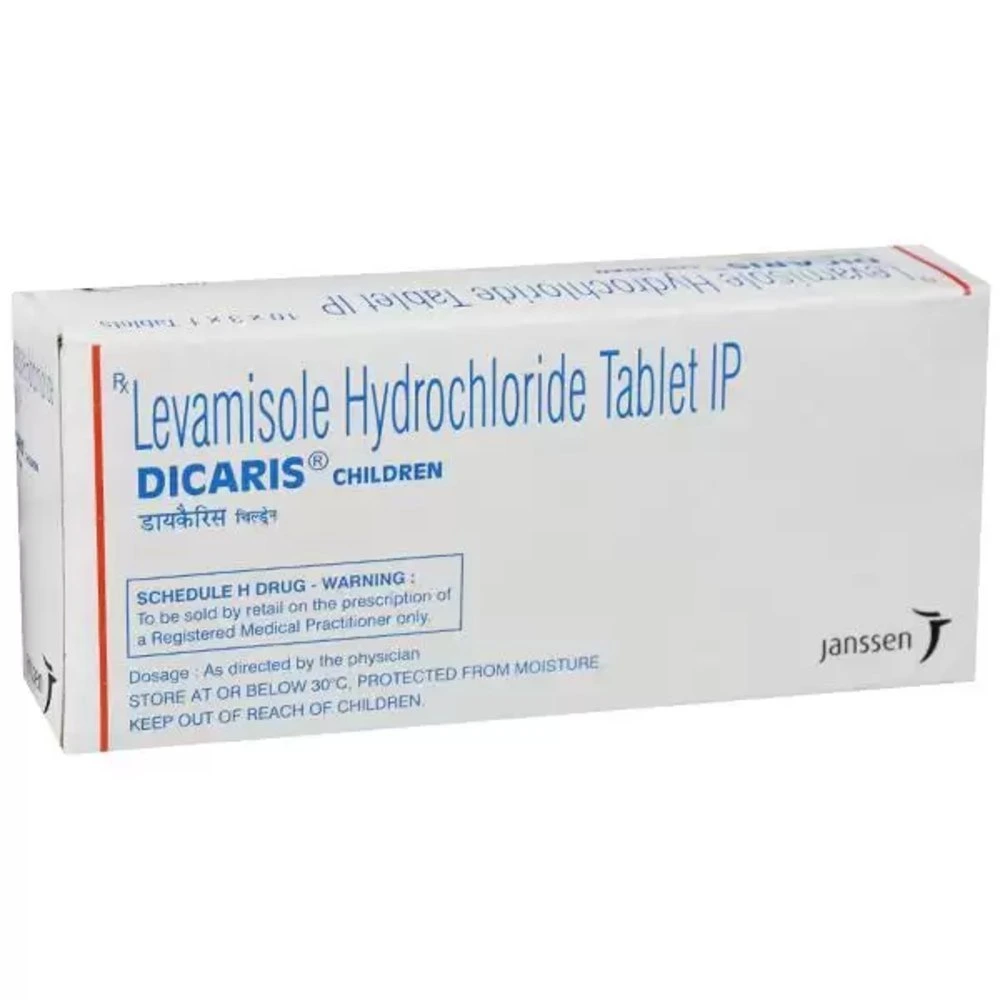
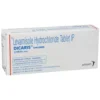
Dicaris Children 50mg (Levamisole)
Price range: $20.00 through $50.00
| Active Ingredient: | Levamisole |
|---|---|
| Indication: | Worm infections |
| Manufacturer: | Janssen Pharmaceuticals, India |
| Packaging: | 1 Tablet in 1 strip |
| Strength: | 50mg |
| Delivery Time: | 12 to 17 days |
Dicaris Children 50mg (Levamisole): Uses, Dosage, Benefits, Side Effects & Complete Guide
Introduction:-
As a parent, discovering that your child has an intestinal worm infection can be deeply unsettling. Yet it is important to know that you are far from alone — the World Health Organization (WHO) estimates that over 880 million children worldwide are at risk of soil-transmitted helminth infections, and many millions are actively affected at any given time. These infections are among the most common health challenges facing children globally, particularly in tropical, subtropical, and resource-limited settings.
The encouraging news is that intestinal worm infections in children are highly treatable when identified and managed correctly. Dicaris Children 50mg (Levamisole) is one of the medically established antiparasitic medications used in the treatment and control of certain intestinal worm infections in children, most notably roundworm (Ascaris lumbricoides) infestations.
Formulated specifically with pediatric patients in mind, Dicaris Children 50mg contains Levamisole as its active ingredient — a well-studied anthelmintic agent with a dual mechanism of action that both paralyzes susceptible worms and supports certain aspects of immune function. When prescribed and administered correctly under medical supervision, it can play a meaningful role in helping your child recover from a worm infection and supporting their return to healthy growth and development.
This comprehensive, parent-focused guide will walk you through everything you need to know about Dicaris Children 50mg (Levamisole) — how it works, how it is dosed, what to expect, potential side effects to watch for, and important safety precautions every parent should understand.
What is Dicaris Children 50mg (Levamisole)?
Dicaris Children 50mg is a prescription-grade oral antiparasitic medication formulated for use in pediatric patients. Its active pharmaceutical ingredient is Levamisole hydrochloride — the levorotatory (L-) isomer of tetramisole, a compound first developed in the 1960s that went on to become one of the most widely studied anthelmintic agents in both human and veterinary medicine.
Levamisole belongs to the imidazothiazole class of drugs and is notable for having a dual pharmacological profile:
- Anthelmintic activity — directly paralyzing and eliminating susceptible intestinal worms
- Immunomodulatory activity — modifying and enhancing certain aspects of immune system function
The name “Dicaris Children” reflects that this formulation is specifically designed and dosed for pediatric use — distinguishing it from higher-strength adult formulations of Levamisole.
Dicaris Children 50mg is typically available as a chewable or standard oral tablet, with the 50mg strength allowing for appropriate weight-based dosing in children. In some markets, Levamisole for children may also be available as an oral syrup or suspension to facilitate administration in younger or smaller children.
Dicaris Children 50mg Composition:-
| Property | Details |
|---|---|
| Active Ingredient | Levamisole Hydrochloride |
| Equivalent Levamisole Base | 50 mg per tablet |
| Drug Class | Anthelmintic / Imidazothiazole derivative; Immunomodulator |
| Dosage Form | Oral tablet (chewable or film-coated, formulation-dependent) |
| Therapeutic Category | Antiparasitic / Pediatric Anthelmintic |
| Route of Administration | Oral |
| Typical Pack Size | 1–3 tablets per pack (varies by region and manufacturer) |
| Prescription Status | Prescription-only medicine (POM) in most countries |
| Age Group | Primarily designed for pediatric patients (children) |
Note: The specific manufacturer and excipient composition of Dicaris Children may vary depending on the country of distribution. Always read the product leaflet provided in your child’s medication pack for region-specific information, including a full list of inactive ingredients.
How Dicaris Children 50mg Works?
Understanding how Dicaris Children 50mg (Levamisole) works helps parents appreciate both its effectiveness and the biological processes involved in their child’s recovery.
Mechanism of Action
Levamisole acts as a nicotinic acetylcholine receptor (nAChR) agonist in the neuromuscular system of susceptible nematode (roundworm) parasites. In straightforward terms, Levamisole mimics a natural signal in the worm’s nervous system — but instead of causing a controlled response, it triggers sustained, irreversible spastic (rigid) paralysis of the worm’s muscles.
This mechanism is critically selective: the specific subtypes of nicotinic acetylcholine receptors targeted by Levamisole are different in nematodes compared to humans. This means that at the therapeutic doses used in children’s deworming, the drug paralyzes the worm while leaving your child’s neuromuscular system unaffected.
Effect on Intestinal Worms
Once Levamisole induces spastic paralysis in the target worms:
- The worm loses all ability to maintain its grip on the intestinal wall, where it was anchored
- It cannot move against the natural flow of intestinal contents
- Normal intestinal movements (peristalsis) carry the paralyzed worm downward toward the large intestine
- The worm is then passed out of the body naturally through a bowel movement
- Parents may notice intact worms in their child’s stool in the days following treatment — this is expected and confirms the medication is working
Immunomodulatory Activity
Beyond its antiparasitic action, Levamisole has documented immune-enhancing properties that may provide additional benefit in children dealing with parasite-related immune suppression:
- Restores depressed T-lymphocyte function — important in children whose immune system may be compromised by heavy worm burdens
- Enhances macrophage activity — improving the immune system’s ability to recognize and respond to pathogens
- Supports neutrophil chemotaxis — helping immune cells migrate to sites of infection
Elimination from the Body
- Levamisole is rapidly absorbed from the gastrointestinal tract
- Peak plasma concentration is typically reached within 1.5–2 hours of oral administration
- It is significantly metabolized in the liver
- The plasma half-life of the parent compound is approximately 3–4 hours
- Metabolites are primarily excreted in the urine, with trace amounts in feces
- Most of the drug is eliminated from the body within 24–48 hours of a single therapeutic dose
Dicaris Children 50mg Uses:-
Treatment of Roundworm Infections-
The primary clinical indication for Dicaris Children 50mg is the treatment of ascariasis — the intestinal infection caused by Ascaris lumbricoides, the largest intestinal roundworm affecting humans. This parasite is transmitted through ingestion of its microscopic eggs, typically via contaminated soil, unwashed produce, or hands that have touched contaminated surfaces — making young children especially vulnerable given their natural tendency to play in soil and touch their faces.
Signs and symptoms of roundworm infection in children may include:
- Recurring abdominal pain or cramping
- Visible worms in the stool or occasionally vomited worms
- Persistent nausea or loss of appetite
- Unexplained weight loss or failure to gain weight normally
- Nutritional deficiencies and anemia
- Restless sleep or irritability
- Abdominal distension (bloating)
- In heavy infestations, intestinal obstruction (a medical emergency requiring urgent care)
- Respiratory symptoms during the larval migration phase (Löffler’s syndrome) — cough, wheezing, and low-grade fever
A single weight-based dose of Dicaris Children 50mg (Levamisole) achieves clinically meaningful cure rates for ascariasis, making it a well-established first-line option in many clinical and community settings.
Explore More Anti-Worm Guides:- Anti-Worm: Complete Guide to Deworming Treatments.
Deworming Therapy in Children
Dicaris Children 50mg is used as part of routine and therapeutic deworming programs — both for individual patients diagnosed with ascariasis and in certain community or school-based deworming initiatives in endemic areas. The WHO strongly supports periodic deworming in high-risk child populations to reduce worm burden, improve nutritional status, and support healthy cognitive development and school attendance.
Control of Intestinal Parasites
In regions where intestinal worm infections are highly prevalent, periodic preventive deworming with anthelmintic agents, including Levamisole, may be recommended as a public health measure by national health authorities — even in children without confirmed active infections. This population-level approach reduces overall worm burden in communities and limits transmission.
Other Doctor-Prescribed Uses
Under specific clinical circumstances and specialist supervision, Levamisole (as found in Dicaris Children 50mg) may also be prescribed for:
- Hookworm infections (Ancylostoma duodenale, Necator americanus) — though other agents may be preferred for this indication
- Nephrotic syndrome in children — as an immunomodulatory agent to help reduce relapse rates; a well-documented off-label use in pediatric nephrology
- Mixed nematode infections — where Ascaris is one of the confirmed species present
⚠️ Off-label uses such as nephrotic syndrome management require specialized pediatric medical supervision and are beyond the scope of routine antiparasitic use.
Dicaris Children 50mg Dosage Guide:-
⚠️ Important: Dosage should always be determined by a qualified healthcare professional. The following information is provided as general educational reference only and should never replace personalized medical advice from your child’s pediatrician.
Standard Pediatric Dosage
The standard anthelmintic dose of Levamisole for children is based on body weight:
| Body Weight | Recommended Dose | Number of 50mg Tablets |
|---|---|---|
| 10–14 kg | 50 mg | 1 tablet |
| 15–19 kg | 75 mg | 1.5 tablets |
| 20–29 kg | 100 mg | 2 tablets |
| 30–39 kg | 125 mg | 2.5 tablets |
| 40–50 kg | 150 mg | 3 tablets |
| Above 50 kg | 150 mg (adult dose) | 3 tablets |
💡 General principle: The standard dose is approximately 2.5 mg/kg body weight, with a commonly used simplified dose of 50 mg for children aged 2–5 years and 75–150 mg for older children, depending on weight. Always follow your doctor’s specific prescription.
Age-Based Considerations
| Age Group | Considerations |
|---|---|
| Under 2 years | Not routinely recommended; use only under strict specialist supervision with a clearly established benefit-to-risk ratio |
| 2–5 years | Weight-based dosing; chewable/suspension formulation preferred; administer under adult supervision |
| 6–12 years | Weight-based dosing; the standard tablet is generally appropriate |
| Adolescents (13–18 years) | May transition to adult dosing (150mg) based on weight; physician to assess individually |
Missed Dose Instructions
- Single-dose regimen (most common): If the prescribed dose was not given on the scheduled day, administer it as soon as possible. If more than one day has passed, contact your pediatrician rather than giving a late or double dose.
- Multi-dose or repeated course: Give the missed dose as soon as you remember and continue at the scheduled time. Never give two doses at once.
- When uncertain, call your child’s doctor or pharmacist — do not guess when it comes to pediatric medication management.
Overdose Information
Levamisole has a reasonably wide therapeutic margin at standard antiparasitic doses; however, accidental overdose — particularly in small children — warrants serious attention. Signs of potential overdose include:
- Severe or persistent vomiting
- Pronounced dizziness or confusion
- Tremors or involuntary movements
- Unusual fatigue or drowsiness
- Seizures (in extreme cases)
If you suspect your child has taken more than the prescribed dose of Dicaris Children 50mg, seek immediate emergency medical attention or call your national poison control center. Do not attempt to induce vomiting unless specifically directed by a medical professional.
How to Take Dicaris Children 50mg?
Administering Dicaris Children 50mg correctly helps maximize its effectiveness and minimizes the risk of side effects. Here is a practical, step-by-step guide for parents:
- With or without food — Dicaris Children 50mg can be given to your child with or without food. If your child tends to experience nausea with oral medications, giving the tablet during or after a light meal can help reduce stomach discomfort.
- Chewable or swallowed whole — Depending on the specific formulation, the tablet may be chewable (particularly helpful for younger children) or film-coated to be swallowed. Always check the product leaflet or ask your pharmacist to confirm the correct administration method.
- Give with water — Ensure your child drinks a full glass of water when taking the tablet, even with chewable forms.
- Evening dosing — Many pediatricians recommend giving the dose in the evening, before bedtime. This timing means the drug is working through the night when the child is resting, and any mild initial side effects (such as nausea) are less disruptive to daily activities.
- No laxative needed — There is no need to administer a laxative before or after Dicaris Children 50mg. The worms are expelled naturally through normal bowel movements — typically within 1–3 days of treatment.
- Treat household contacts if indicated — For pinworm co-infections or high-risk household situations, your doctor may recommend treating all family members simultaneously to prevent reinfection.
- Complete the prescribed course — Even if your child seems well or you notice worms being passed, complete the full prescribed treatment as directed by your doctor.
- Follow-up deworming schedules — In endemic areas, your child’s doctor may schedule repeat deworming every 3–6 months as part of a preventive program. Follow this schedule faithfully for the best long-term results.
- Reinforce hygiene habits — Medication alone is not sufficient; teach and reinforce thorough handwashing, especially before meals and after using the toilet, to reduce the risk of reinfection.
Dicaris Children 50mg Side Effects:-
Dicaris Children 50mg is generally well-tolerated at the single antiparasitic doses used for pediatric deworming. When side effects do occur, they are typically mild and short-lived.
Side Effects Overview Table
| Side Effect | Type | Estimated Frequency | Recommended Action |
|---|---|---|---|
| Nausea | Common | Common (1–10%) | Give with food; it usually resolves within hours |
| Stomach discomfort/cramping | Common | Common (1–10%) | Rest; warm compress on abdomen; inform doctor if severe |
| Vomiting | Common | Common (1–10%) | Keep the child hydrated; contact the doctor if persistent |
| Diarrhea | Common | Uncommon (<5%) | Ensure adequate fluids; usually self-limiting |
| Headache | Common | Common (1–10%) | Rest; age-appropriate analgesic if needed; inform doctor if persistent |
| Dizziness | Common | Uncommon (<5%) | Keep the child safely rested; avoid active play until resolved |
| Fatigue / Malaise | Common | Uncommon (<5%) | Allow rest; it usually resolves within hours |
| Loss of appetite | Common | Uncommon (<5%) | Offer preferred foods; typically brief |
| Skin rash / Hives (Urticaria) | Potentially serious | Rare (<1%) | Stop medication; contact the doctor promptly |
| Fever | Potentially serious | Rare (<1%) | Monitor temperature; contact a doctor if persistent or high |
| Agranulocytosis (very low white blood cells) | Serious | Rare — more associated with prolonged/repeated dosing | Seek immediate medical attention if fever, mouth ulcers, or sore throat appear |
| Severe allergic reaction / Anaphylaxis | Serious | Very rare (<0.1%) | Call emergency services immediately |
| Neurological effects (tremors, unusual behavior) | Serious | Very rare | Seek immediate medical attention |
⚠️ Parent Alert — Agranulocytosis: One of the most clinically important risks associated with Levamisole — particularly with repeated or prolonged use — is agranulocytosis (a severe reduction in white blood cells that impairs your child’s ability to fight infections). While this is significantly less common with single-dose antiparasitic use, parents must be vigilant. If your child develops an unexplained fever, mouth sores, persistent sore throat, or unusual bruising within 2–4 weeks after treatment, contact your pediatrician immediately for a blood count evaluation.
Precautions and Warnings:-
Before giving Dicaris Children 50mg to your child, ensure your pediatrician is fully informed of your child’s complete medical history.
Children with Liver Disease
Levamisole is substantially metabolized by the liver. In children with pre-existing liver disease or impaired hepatic function, drug clearance may be reduced, leading to higher drug levels and a greater risk of side effects. An alternative antiparasitic medication with a lower hepatic burden may be more appropriate — your pediatrician will evaluate this.
Kidney Disease
Although Levamisole itself does not accumulate significantly in renal impairment, its metabolites are renally excreted. In children with significant kidney disease, metabolite buildup may occur. Always disclose any renal conditions to your child’s doctor before treatment.
Blood Disorders
Children with pre-existing hematological conditions — including those with reduced white blood cell counts (leukopenia, neutropenia) or those receiving other medications that affect blood cell production — face a heightened risk of serious hematological complications with Levamisole. A pre-treatment blood count may be recommended in such children.
Drug Allergies
Do not administer Dicaris Children 50mg if your child has a known allergy to Levamisole or any of the tablet’s excipients. Carefully review the product ingredients list, and inform your pharmacist of all known allergies before dispensing.
Medical Supervision Requirements
Given Levamisole’s unique pharmacological profile — including systemic absorption, drug interaction potential, and the rare but serious agranulocytosis risk — Dicaris Children 50mg should only be used under the direct supervision and prescription of a qualified pediatrician or physician. Self-medicating a child with this medication is strongly discouraged.
Drug Interactions:-
Because Levamisole is systemically absorbed, it carries a more significant drug interaction profile than minimally absorbed anthelmintics. Always provide your child’s doctor and pharmacist with a complete list of all medications your child is taking.
| Interacting Drug / Substance | Type of Interaction | Clinical Significance | Recommendation |
|---|---|---|---|
| Warfarin / Oral anticoagulants | Levamisole may potentiate anticoagulant effects, increasing the risk of bleeding | High | Inform the doctor immediately; INR/clotting time monitoring is essential |
| Phenytoin (anticonvulsant) | Levamisole may increase phenytoin plasma levels, increasing the risk | Moderate–High | Monitor anticonvulsant levels; dose adjustment may be needed |
| Alcohol (relevant for adolescents) | Potentiates CNS side effects — dizziness, nausea, and sedation | Moderate | Avoid alcohol during and after treatment |
| Fluorouracil (5-FU) | Significant increase in agranulocytosis risk when combined | High | Avoid combination; inform oncology team if applicable |
| Immunosuppressants (e.g., cyclosporine, methotrexate, corticosteroids) | Unpredictable immune system interactions; potential for antagonism or additive adverse effects | Moderate–High | Specialist assessment required; close monitoring necessary |
| Clozapine | Both drugs are independently associated with agranulocytosis; the combined risk may be very high | High | Avoid concurrent use without specialist hematological monitoring |
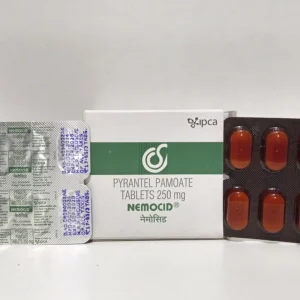
| Other anthelmintics (e.g., pyrantel) | Possible overlapping neuromuscular effects; limited pediatric data | Low–Moderate | Use the combination only under a physician’s direction |
| OTC antipyretics / analgesics (e.g., paracetamol, ibuprofen) | Generally low interaction risk at antiparasitic doses | Low | Disclose all OTC medications to your child’s pharmacist |
Who Should Avoid Dicaris Children 50mg?
Dicaris Children 50mg should not be given, or used only with extreme caution and specialist oversight, in the following situations:
- Children under 2 years of age — safety and dosing not well-established; only under strict specialist supervision
- Known allergy or hypersensitivity to Levamisole hydrochloride or any tablet ingredient
- Children with pre-existing agranulocytosis, neutropenia, or significant leukopenia — Levamisole may further suppress white blood cell production
- Children with severe liver failure — impaired metabolism significantly increases drug accumulation and toxicity risk
- Children concurrently taking Warfarin or other oral anticoagulants — unless under close medical monitoring with coagulation testing
- Children taking Clozapine or other medications are independently associated with agranulocytosis — the combined risk is unacceptably high without specialist oversight
- Children with a prior serious adverse reaction to Levamisole or other imidazothiazole-class drugs
- Children concurrently on immunosuppressive therapy — unless specifically assessed and approved by the prescribing specialist
Storage Instructions
Proper storage is essential to ensure Dicaris Children 50mg remains safe and fully effective until use:
- 🌡️ Temperature: Store at room temperature between 15°C and 25°C (59°F–77°F) — avoid exposure to heat sources, direct sunlight, and freezing temperatures
- 💧 Moisture: Keep in a dry place — do not store in the bathroom, near kitchen sinks, or in any humid environment that could affect tablet integrity
- ☀️ Light protection: Store in the original blister pack within a closed cupboard or drawer, away from direct light
- 🧒 Child safety (critical): Store completely out of reach and sight of all children, including the child being treated — curious children may attempt to take additional tablets. Use a locked medicine cabinet where possible
- 📅 Expiry date: Always check the expiry date before administering — never use expired medication
- 🗑️ Safe disposal: Return any unused or expired tablets to a licensed pharmacy take-back program — do not dispose of in household rubbish or flush down the toilet
Dicaris Children 50mg vs Other Deworming Medicines
Understanding how Levamisole (Dicaris Children 50mg) compares to other antiparasitic medications helps parents and healthcare providers make informed treatment choices.
| Feature | Dicaris Children 50mg (Levamisole) | Albendazole | Mebendazole | Pyrantel (e.g., Nemocid) |
|---|---|---|---|---|
| Drug Class | Imidazothiazole | Benzimidazole | Benzimidazole | Tetrahydropyrimidine |
| Mechanism | Nicotinic receptor agonist → Spastic paralysis | Microtubule inhibition → glucose starvation | Microtubule inhibition → glucose starvation | Nicotinic receptor agonist → Spastic paralysis |
| Roundworms (Ascaris) | ✅ Highly effective | ✅ Highly effective | ✅ Highly effective | ✅ Highly effective |
| Hookworms | ⚠️ Moderate | ✅ Highly effective | ✅ Effective | ✅ Effective |
| Pinworms | ⚠️ Not first-line | ✅ Effective | ✅ Effective | ✅ First-line |
| Whipworms | ❌ Not effective | ✅ Effective | ✅ Effective | ❌ Not effective |
| Tapeworms | ❌ Not effective | ✅ Some species | ❌ Limited | ❌ Not effective |
| Immunomodulatory activity | ✅ Yes (significant) | ❌ No | ❌ No | ❌ No |
| Systemic absorption | Significant | Moderate | Minimal | Minimal |
| Agranulocytosis risk | ⚠️ Yes (monitor) | ❌ No | ❌ No | ❌ No |
| Pediatric formulation | ✅ Yes (50mg child-specific) | ✅ Yes | ✅ Yes | ✅ Yes |
| Minimum age (general) | ≥ 2 years | ≥ 1 year | ≥ 2 years | ≥ 2 years |
| Typical dose duration | Single dose | Single dose or 3 days | 1–3 days | Single dose |
| WHO Essential Medicine | ✅ Yes | ✅ Yes | ✅ Yes | ✅ Yes |
| Prescription Required | ✅ Yes (most countries) | ✅ Yes (most countries) | Rx / OTC (varies) | Rx / OTC (varies) |
Frequently Asked Questions (FAQs)?
1. What is Dicaris Children 50mg used for?
Dicaris Children 50mg (Levamisole) is primarily used to treat intestinal roundworm infections (Ascaris lumbricoides) in children. Roundworm is one of the most common parasitic infections affecting children worldwide, spreading through contact with soil or food contaminated with worm eggs. Under specialist supervision, Levamisole may also be used to help manage certain hookworm infections and, in some pediatric nephrology centers, as an immunomodulatory agent in childhood nephrotic syndrome. Routine antiparasitic use, however, focuses on the deworming indication.
2. How does Levamisole work in children?
Levamisole works by binding to nicotinic acetylcholine receptors in the neuromuscular junction of susceptible parasitic worms. This causes the worm to experience spastic (rigid) paralysis — it can no longer hold on to the intestinal wall or move against the intestinal flow. The paralyzed worm is then carried naturally through your child’s intestines and expelled in the stool, typically within 24–72 hours of treatment. At the doses used for deworming, this mechanism selectively targets worm neurology — not your child’s.
3. Can Dicaris Children 50mg treat roundworms effectively?
Yes — treating roundworm (Ascaris lumbricoides) is the primary approved indication for Dicaris Children 50mg. Clinical studies and decades of field use support high cure rates for ascariasis with a single weight-based dose of Levamisole in children. Parents can typically expect to see worms being passed in their child’s stool within 1–3 days of treatment. A follow-up stool examination, recommended 2–4 weeks after treatment, confirms successful clearance.
4. Is Dicaris Children 50mg safe for children?
Dicaris Children 50mg is generally considered safe for children aged 2 years and older when prescribed by a pediatrician and used at the correct weight-based dose. It has been used in pediatric populations globally for decades. However, compared to some other dewormers like Pyrantel or Albendazole, Levamisole requires closer medical supervision due to its systemic absorption and the rare but serious risk of agranulocytosis — particularly with repeated dosing. Always ensure your child’s use of this medication is supervised by a qualified healthcare professional.
5. What are the common side effects of Dicaris Children 50mg in children?
The most frequently reported side effects in children include nausea, stomach discomfort, vomiting, headache, and mild dizziness — all of which are generally mild and resolve within a few hours. Giving the medication with a light meal can help reduce stomach-related side effects. More serious side effects — including skin rash, agranulocytosis (very low white blood cells), or signs of allergic reaction — are rare but require immediate medical attention. Watch for unexplained fever, mouth ulcers, or persistent sore throat in the weeks following treatment.
6. Can Dicaris Children 50mg be taken with food?
Yes — Dicaris Children 50mg can be given with or without food. Food is not required for the drug to be therapeutically effective. However, if your child is sensitive to medications or prone to nausea, giving the tablet during or after a light, non-fatty meal may significantly reduce the chance of stomach upset. Avoid giving the medication alongside a very heavy or oily meal, and ensure your child does not consume alcohol (relevant for older children and adolescents).
7. Does my child need a prescription for Dicaris Children (Levamisole)?
Yes — in most countries, Levamisole (including Dicaris Children 50mg) is a prescription-only medication for pediatric patients. The prescription requirement exists because Levamisole:
- Requires accurate weight-based dosing
- Has a more complex safety profile than some OTC dewormers
- Can cause serious, rare side effects (agranulocytosis) that warrant medical screening
- May interact with other medications your child is taking
Do not attempt to self-prescribe or purchase this medication without a valid doctor’s prescription. A pediatrician can confirm the diagnosis through appropriate testing and determine the correct dose for your child.
8. What should I do if my child misses a dose of Dicaris Children 50mg?
- Single-dose treatment (most common): If you forgot to give the dose on the scheduled day, give it as soon as you remember — ideally on the same day. If a full day has passed, do not give a belated dose without consulting your pediatrician first.
- Multi-dose course: Give the missed dose as soon as possible and continue at the regularly scheduled times. Never give two doses at once to compensate for a missed one — this risks side effects without meaningful additional benefit.
- If you are unsure what to do, contact your child’s doctor or pharmacist for clear, personalized guidance.
Medical Disclaimer:-
This article is for informational and educational purposes only. It does not constitute medical advice, diagnosis, or treatment. Always consult a qualified pediatrician or healthcare professional before giving any medication to your child.
Additional information
| mg | 50mg |
|---|---|
| unit | 20 Tablets, 40 Tablets, 60 Tablets |

Reviews
There are no reviews yet.