
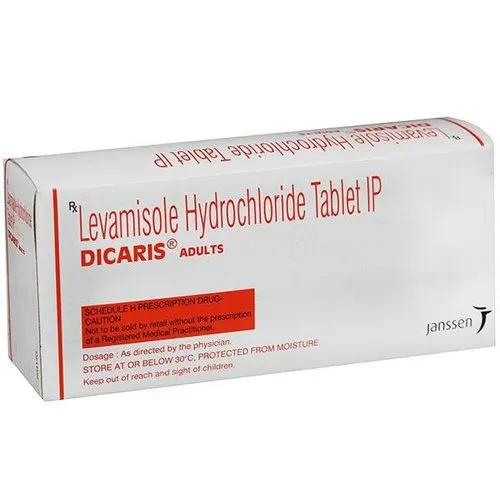
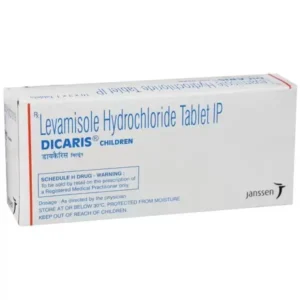
Dicaris Adults 150mg (Levamisole)
Price range: $20.00 through $50.00
| Active Ingredient: | Levamisole |
|---|---|
| Indication: | Worm infections |
| Manufacturer: | Janssen Pharmaceuticals, India |
| Packaging: | 1 Tablet in 1 strip |
| Strength: | 150mg |
| Delivery Time: | 12 to 17 days |
Dicaris Adults 150mg (Levamisole): Uses, Dosage, Benefits, Side Effects & Complete Guide
Introduction:-
Intestinal parasitic worm infections are not merely a concern of childhood — adults across the globe, particularly those in tropical, subtropical, and resource-limited settings, remain significantly at risk. Whether acquired through contaminated soil, food, or water, intestinal worm infections can cause a wide range of symptoms — from mild abdominal discomfort to serious nutritional deficiencies and organ complications — if left untreated.
Dicaris Adults 150mg (Levamisole) is a well-established, prescription-grade oral antiparasitic medication specifically formulated for adult use. Containing Levamisole hydrochloride as its active ingredient, Dicaris Adults 150mg is clinically recognized for its effectiveness against intestinal roundworm infections (Ascaris lumbricoides) — offering adults a convenient, single-dose treatment option supported by decades of global clinical use.
What makes Dicaris Adults 150mg particularly noteworthy among antiparasitic medications is its dual pharmacological action — functioning not only as an anthelmintic that paralyzes and eliminates susceptible worms, but also as an immunomodulator that helps restore and enhance certain immune system functions. This combination makes it a unique and versatile agent in the field of antiparasitic therapy.
This comprehensive, patient-friendly guide covers everything you need to know about Dicaris Adults 150mg (Levamisole) — from its mechanism of action, approved uses, and correct dosing to potential side effects, important precautions, drug interactions, and answers to the most frequently asked questions. Whether you are a patient prescribed this medication or someone seeking reliable, medically accurate information, this guide is designed to inform and empower you.
What is Dicaris Adults 150mg (Levamisole)?
Dicaris Adults 150mg is an oral prescription antiparasitic tablet formulated for adult patients. Its active pharmaceutical ingredient, Levamisole hydrochloride, is the levorotatory (L-) isomer of tetramisole — a compound first synthesized in the 1960s that has since become one of the most studied anthelmintic agents in both human and veterinary medicine.
Levamisole belongs to the imidazothiazole class of drugs and holds a distinctive position in antiparasitic pharmacology due to its dual biological activity:
- Anthelmintic (anti-worm) action — directly paralyzing and facilitating the elimination of susceptible intestinal nematodes
- Immunomodulatory action — modifying immune system function by restoring depressed T-lymphocyte and macrophage activity
The designation “Dicaris Adults” clearly distinguishes this formulation from the pediatric version (Dicaris Children 50mg), indicating that this is the full adult therapeutic dose of 150mg — three times the pediatric tablet strength — in a single convenient tablet or pack.
Dicaris Adults 150mg is available primarily as a film-coated oral tablet. In some formulations and markets, Levamisole may also be available as an oral solution; however, the 150mg tablet is the standard adult dosage form for antiparasitic treatment.
Dicaris Adults 150mg Composition:-
| Property | Details |
|---|---|
| Active Ingredient | Levamisole Hydrochloride |
| Equivalent Levamisole Base | 150 mg per tablet / per dose |
| Drug Class | Anthelmintic / Imidazothiazole derivative; Immunomodulator |
| Dosage Form | Film-coated oral tablet |
| Therapeutic Category | Antiparasitic / Anthelmintic (Adult Formulation) |
| Route of Administration | Oral |
| Typical Pack Size | 1–2 tablets per pack (varies by region and manufacturer) |
| Prescription Status | Prescription-only medicine (POM) in most countries |
| Target Population | Adults (generally ≥ 18 years or ≥ 50 kg body weight) |
Note: Manufacturer identity and excipient composition may vary by country of distribution. Always refer to the product information leaflet included in your specific pack for complete formulation details, including inactive ingredients and any known allergens in the excipient list.
How Dicaris Adults 150mg Works?
The mechanism of action of Dicaris Adults 150mg (Levamisole) is both scientifically elegant and clinically effective. Understanding how it works helps patients appreciate why it is prescribed and what to expect from treatment.
Mechanism of Action
Levamisole functions as a selective nicotinic acetylcholine receptor (nAChR) agonist — specifically targeting receptor subtypes found in the neuromuscular junction of susceptible nematode (roundworm) parasites.
In practical terms, Levamisole mimics the action of acetylcholine — a natural neurotransmitter — at these worm-specific receptors. Rather than producing a controlled, temporary neuromuscular signal, however, Levamisole triggers a sustained and irreversible spastic (rigid) paralysis of the worm’s muscles.
The critical pharmacological feature here is selectivity: the nicotinic acetylcholine receptor subtypes targeted by Levamisole in nematode parasites differ structurally from those found in the human neuromuscular system. This means that at standard therapeutic doses, Levamisole paralyzes the worm’s nervous system with minimal effect on the patient’s own neuromuscular function.
Effect on Parasitic Worms
The spastic paralysis induced by Dicaris Adults 150mg produces the following chain of events:
- The worm loses its ability to grip the intestinal wall where it has been anchored
- It is unable to move against the flow of intestinal contents
- Normal intestinal peristalsis — the wave-like muscular contractions that move contents through the gut — sweeps the paralyzed worm toward the large intestine
- The worm is then expelled from the body naturally through a bowel movement
- Patients may observe intact worms in their stool within 24–72 hours after taking the medication — this is an expected and positive sign confirming treatment is working
Immunomodulatory Activity
A distinctive feature of Levamisole that sets Dicaris Adults 150mg apart from other anthelmintics is its well-documented immune-enhancing properties:
- T-lymphocyte restoration — Levamisole restores depressed T-cell function, which may be compromised in patients with chronic or heavy worm burdens
- Macrophage activation — enhances the phagocytic capacity of macrophages (immune cells that engulf and destroy pathogens)
- Neutrophil chemotaxis enhancement — improves the ability of neutrophils to migrate to sites of infection and inflammation
- B-cell and antibody modulation — may influence humoral immune responses in certain clinical contexts
These immune properties have historically led to Levamisole’s investigation and use in specialized clinical contexts beyond antiparasitic therapy — including adjunctive oncology applications and immune-mediated renal conditions — all under strict specialist supervision.
Elimination from the Body
- Levamisole is rapidly and well-absorbed from the gastrointestinal tract following oral administration
- Peak plasma concentration is reached within approximately 1.5–2 hours
- Extensive first-pass and hepatic metabolism occurs — the liver is the primary site of drug breakdown
- The plasma half-life of the parent compound is approximately 3–4 hours
- Metabolites are primarily excreted via the kidneys (urine), with a smaller fraction in feces
- The drug and its metabolites are largely eliminated within 24–48 hours after a single therapeutic dose
- This rapid elimination profile means minimal prolonged drug exposure following standard single-dose antiparasitic use
Dicaris Adults 150mg Uses:-
Treatment of Roundworm Infections
The primary and most well-supported clinical indication for Dicaris Adults 150mg is the treatment of ascariasis — the intestinal infection caused by Ascaris lumbricoides, the world’s most prevalent soil-transmitted helminth. The WHO estimates that ascariasis affects between 800 million and 1.2 billion people globally, with adults in endemic areas — particularly agricultural workers and those with ongoing exposure to contaminated soil — at significant ongoing risk.
Roundworm infections in adults can present with a wide range of symptoms depending on the worm burden and the stage of infection:
- Light infections: Often asymptomatic or causing only mild, intermittent abdominal discomfort
- Moderate to heavy infections:
- Persistent abdominal pain and bloating
- Nausea, vomiting, and loss of appetite
- Visible worms in stool or, in some cases, vomited worms
- Unexplained weight loss or nutritional deficiencies
- Iron-deficiency anemia and protein malnutrition
- Fatigue and reduced work capacity
- Severe infections (rare but serious):
- Intestinal obstruction — a medical emergency
- Biliary or pancreatic duct obstruction (worms migrating to the bile ducts)
- Löffler’s syndrome — respiratory symptoms (cough, wheezing, shortness of breath) during larval pulmonary migration phase
A single 150mg dose of Dicaris Adults achieves clinically meaningful cure rates for ascariasis, making it a practical and effective first-line option in many clinical and community settings.
Explore More Anti-Worm Guides:- Anti-Worm: Complete Guide to Deworming Treatments.
Deworming Therapy
Beyond individual treatment, Dicaris Adults 150mg plays a role in structured adult deworming programs in endemic regions. In communities with high prevalence of soil-transmitted helminthiasis, periodic preventive deworming of adults — particularly those of reproductive age, agricultural workers, and other high-risk groups — is recommended by WHO as part of a comprehensive parasite control strategy.
Intestinal Parasite Control
In settings where multiple intestinal parasites are common, Dicaris Adults 150mg contributes to the broader goal of reducing community worm burden. Lowering the total parasite load in a population not only improves individual health outcomes but also reduces environmental egg contamination — breaking the transmission cycle and protecting others in the community from reinfection.
Other Doctor-Prescribed Uses
Under specialist medical supervision, Levamisole (as contained in Dicaris Adults 150mg) may also be prescribed for:
- Hookworm infections (Ancylostoma duodenale, Necator americanus) — though other agents such as albendazole may be preferred for consistent efficacy against hookworm
- Mixed intestinal nematode infections — where Ascaris is confirmed as a component of a mixed infestation
- Immunomodulatory indications — historically in adjunctive colorectal cancer therapy (largely superseded in modern oncology) and in specialized autoimmune or immune-mediated conditions
- Nephrotic syndrome — as an immunomodulatory agent in certain specialist settings (though more commonly applied in pediatric cases)
⚠️ Non-antiparasitic uses of Levamisole are strictly specialist-supervised and are outside the scope of routine deworming with Dicaris Adults 150mg. Do not use this medication for any condition not confirmed and prescribed by your doctor.
Dicaris Adults 150mg Dosage Guide:-
⚠️ Important: Dosage should always be determined by a qualified healthcare professional. The following information is provided for general educational reference only and must not be used as a substitute for individualized medical advice from your doctor or pharmacist.
Standard Adult Dosage
| Condition | Dose | Frequency | Duration |
|---|---|---|---|
| Ascariasis (Ascaris lumbricoides) | 150 mg | Single dose | 1 day |
| Hookworm infections (where prescribed) | 150 mg | Single dose; may repeat after 7 days if recommended | 1–2 doses |
| Mixed nematode infections | 150 mg | As directed by the physician | Per physician guidance |
| Repeat / preventive deworming | 150 mg | Every 3–6 months in endemic areas | Per public health or physician guidance |
💡 Practical note: The 150mg dose is typically provided either as a single 150mg tablet or as three 50mg tablets taken simultaneously — depending on the specific product format available in your region. Always follow your prescription exactly as written.
Missed Dose Instructions
- Single-dose regimen (most common): If you forgot to take your prescribed dose on the scheduled day, take it as soon as you remember — ideally on the same day. If a full day has passed without taking the dose, contact your prescribing doctor before taking it late.
- Multi-dose or repeated course: Take the missed dose as soon as possible and continue subsequent doses at the regularly scheduled times. Do not double up on doses to compensate for one that was missed.
- When in doubt: Contact your doctor or pharmacist for specific, personalized guidance rather than making assumptions about dosing.
Overdose Information
While Levamisole has a reasonably broad therapeutic margin at standard antiparasitic doses, overdose — particularly in smaller-framed adults or those with liver impairment — carries real risks due to the drug’s systemic absorption. Potential signs of overdose include:
- Severe or prolonged nausea, vomiting, and abdominal cramping
- Intense dizziness, confusion, or disorientation
- Tremors or involuntary muscle movements
- Marked fatigue or drowsiness
- In severe cases: seizures or signs of agranulocytosis (fever, persistent sore throat, mouth ulcers)
If you suspect you have taken more than your prescribed dose of Dicaris Adults 150mg, seek immediate emergency medical attention or contact your national poison control center without delay. Do not attempt to induce vomiting unless specifically directed to do so by a medical professional.
How to Take Dicaris Adults 150mg?
Following the correct administration approach maximizes Dicaris Adults 150mg’s therapeutic effectiveness while minimizing potential side effects. Here is a practical, step-by-step guide:
- With or without food — Dicaris Adults 150mg can be taken either on an empty stomach or with a meal. If you tend to experience nausea with oral medications, taking the tablet during or immediately after a light meal helps reduce stomach discomfort without compromising drug effectiveness.
- Swallow whole with water — Take the tablet(s) with a full glass of water. Do not crush, break, or chew film-coated tablets unless your doctor or pharmacist specifically advises otherwise.
- Avoid grapefruit and alcohol — Avoid consuming grapefruit or grapefruit juice and alcohol on the day of dosing. Alcohol, in particular, may potentiate dizziness and nausea.
- Single-dose administration — For standard roundworm treatment, the entire 150mg dose is taken at one time, typically in the evening or before bedtime. Evening administration means the drug acts overnight when you are resting, and any mild side effects are less likely to interfere with daytime activities.
- No laxative or dietary preparation required — Unlike older antiparasitic regimens, there is no need for fasting, special diet, or pre/post-dose laxative use with Levamisole. Worms are expelled naturally through normal bowel movements.
- Observe your stool in the days following treatment — You may observe intact or partial worms in your stool within 24–72 hours of taking the tablet. This is expected and confirms the medication is working.
- Avoid driving or operating heavy machinery until you know how Dicaris Adults 150mg affects you — dizziness is a possible side effect that can impair alertness.
- Attend follow-up testing — Your doctor may schedule a follow-up stool examination 2–4 weeks after treatment to confirm successful worm clearance. Attend this appointment as directed.
- Maintain hygiene practices post-treatment — Thoroughly wash hands before meals and after using the toilet. Wash clothing and bedding promptly after treatment to minimize reinfection risk.
- Complete any repeat doses as scheduled — If your doctor prescribes a repeat dose (e.g., after 7 days for hookworm or after 3–6 months in an endemic setting), ensure you take it as directed for full parasite control.
Dicaris Adults 150mg Side Effects:-
Dicaris Adults 150mg is generally well-tolerated at the single antiparasitic dose used for adult deworming. Side effects, when they occur, are most commonly mild and transient.
Side Effects Overview Table
| Side Effect | Type | Estimated Frequency | Recommended Action |
|---|---|---|---|
| Nausea | Common | Common (1–10%) | Take with food; usually self-limiting within hours |
| Stomach discomfort/cramping | Common | Common (1–10%) | Rest, warm compress, contact a doctor if severe or persistent |
| Vomiting | Common | Common (1–10%) | Stay well hydrated; inform the doctor if it does not subside |
| Diarrhea | Common | Uncommon (<5%) | Maintain fluid intake; usually brief and self-resolving |
| Headache | Common | Common (1–10%) | Rest; OTC analgesic if required; inform doctor if persistent |
| Dizziness / Lightheadedness | Common | Uncommon (<5%) | Avoid driving; sit or lie down safely until resolved |
| Fatigue / Malaise | Common | Uncommon (<5%) | Rest generally resolves within hours of dosing |
| Loss of appetite | Common | Uncommon (<5%) | Usually brief; maintain normal nutrition as tolerated |
| Skin rash / Urticaria (hives) | Potentially serious | Rare (<1%) | Stop medication; contact the doctor promptly |
| Fever | Potentially serious | Rare (<1%) | Monitor; seek medical attention if high or persistent |
| Agranulocytosis (severe drop in white blood cells) | Serious | Rare — predominantly with prolonged/repeated use | Seek immediate medical attention if unexplained fever, mouth ulcers, or sore throat develop |
| Liver enzyme elevation | Serious | Rare (<1%) | Inform the doctor; liver function assessment may be needed |
| Severe allergic reaction / Anaphylaxis | Serious | Very rare (<0.1%) | Call emergency services immediately |
| Neurological effects (tremors, confusion, unusual behavior) | Serious | Very rare | Seek immediate emergency medical attention |
⚠️ Critical Alert — Agranulocytosis: The most clinically serious risk associated with Levamisole use — especially with repeated or prolonged administration — is agranulocytosis: a severe, potentially life-threatening reduction in white blood cells (neutrophils) that dramatically impairs the body’s ability to fight infection. While the risk at a standard single antiparasitic dose is low, it is not zero. Report any unexplained fever, persistent sore throat, mouth ulcers, unusual bruising, or signs of infection developing within 2–4 weeks of treatment to your doctor immediately. A full blood count (FBC) can rapidly assess white blood cell levels.
Precautions and Warnings:-
Before taking Dicaris Adults 150mg, provide your prescribing doctor with a full medical history and a complete list of current medications. Pay particular attention to the following:
Pregnancy
Dicaris Adults 150mg is not routinely recommended during pregnancy, particularly in the first trimester, due to insufficient robust human safety data for Levamisole in pregnancy. In later trimesters, a prescribing physician may consider its use if the risk of a significant worm infestation clearly outweighs the potential fetal risk — for example, in the case of heavy Ascaris burden compromising maternal nutrition. Any decision must be made by an obstetrician or specialist following careful individual benefit-risk assessment. Do not self-administer this medication during pregnancy.
Breastfeeding
Levamisole and its metabolites may pass into breast milk in small amounts. The clinical significance for the nursing infant is not fully established. As a precautionary measure, discuss timing of the dose with your doctor — a brief interruption of breastfeeding for 24–48 hours after taking Dicaris Adults 150mg, with expressed milk discarded during this period, may be recommended.
Liver Disease
Since Levamisole undergoes extensive hepatic (liver) metabolism, patients with pre-existing liver impairment may experience reduced drug clearance and higher plasma concentrations. This increases the risk of both therapeutic excess and adverse effects. Inform your doctor of any liver condition — a dose adjustment, enhanced monitoring, or alternative antiparasitic therapy may be appropriate.
Kidney Disease
The metabolites of Levamisole are primarily excreted by the kidneys. In patients with significant renal impairment, metabolite accumulation is possible, which may prolong drug exposure and increase side effect risk. Disclose any kidney condition to your prescribing doctor before use.
Blood Disorders
Patients with pre-existing hematological conditions — including low white blood cell counts (leukopenia, neutropenia), bone marrow suppression, or a history of blood dyscrasias — face a meaningfully heightened risk of serious hematological complications with Levamisole. A pre-treatment complete blood count (CBC/FBC) is strongly recommended in any patient with a known or suspected blood disorder. Your doctor may decide that an alternative antiparasitic agent is safer in your specific case.
Drug Allergies
Do not take Dicaris Adults 150mg if you have a known allergy or hypersensitivity to Levamisole hydrochloride or any of the tablet’s excipients. Carefully review the product insert for the full list of inactive ingredients and disclose all known drug and excipient allergies to your pharmacist before dispensing.
Drug Interactions:-
Dicaris Adults 150mg (Levamisole) carries a more significant drug interaction profile than minimally absorbed anthelmintics — a direct consequence of its meaningful systemic absorption. Always provide your doctor and pharmacist with a complete and up-to-date list of every medication you are taking, including prescription drugs, OTC medicines, supplements, and herbal products.
| Interacting Drug / Substance | Type of Interaction | Clinical Significance | Recommendation |
|---|---|---|---|
| Warfarin / Oral anticoagulants | Levamisole may significantly potentiate anticoagulant effects, increasing bleeding risk | High | Inform doctor immediately; INR/PT monitoring essential; dose adjustment likely required |
| Phenytoin (anticonvulsant) | Levamisole may increase phenytoin plasma levels by inhibiting its metabolism, raising the toxicity risk | Moderate–High | Monitor anticonvulsant blood levels; dose adjustment may be necessary |
| Alcohol | Potentiates CNS depressant effects of Levamisole — worsened dizziness, sedation, and nausea | Moderate | Avoid alcohol on the day of dosing and for 24 hours after |
| Fluorouracil (5-FU) | Historically combined in oncology, significantly increases the risk of serious toxicity and agranulocytosis | High | This combination must only be managed by an oncology specialist |
| Immunosuppressants (e.g., methotrexate, cyclosporine, azathioprine) | Unpredictable immune system interactions; potential antagonism or additive adverse immune effects | Moderate–High | Specialist assessment essential; do not combine without rheumatology or transplant team oversight |
| Clozapine | Both drugs are independently associated with agranulocytosis; the combined risk is very significantly elevated | High | Avoid concurrent use without specialist hematological monitoring and explicit specialist approval |
| Carbamazepine (anticonvulsant) | Potential enzyme induction by carbamazepine may reduce Levamisole plasma levels | Low–Moderate | Inform the prescribing doctor; clinical response monitoring may be needed |
| Other anthelmintics (e.g., pyrantel, albendazole) | Possible overlapping or unpredictable effects; limited adult data on the combination | Low–Moderate | Use combinations only under specific physician direction |
| NSAIDs / OTC analgesics (e.g., ibuprofen, paracetamol) | Generally low interaction risk at antiparasitic doses | Low | Disclose all OTC medications to your pharmacist |
| Herbal supplements (e.g., St. John’s Wort) | May affect hepatic enzyme activity and alter Levamisole metabolism | Variable | Disclose all herbal products to your prescribing doctor |
Who Should Avoid Dicaris Adults 150mg?
Dicaris Adults 150mg should not be taken, or should only be used with extreme caution and specialist oversight, in the following situations:
- Known hypersensitivity or allergy to Levamisole hydrochloride or any excipient in the tablet formulation
- Patients with pre-existing agranulocytosis, neutropenia, or significant leukopenia — Levamisole may dangerously further suppress white blood cell production
- Patients with severe hepatic failure — impaired drug metabolism significantly increases systemic exposure and toxicity risk
- Patients concurrently taking Warfarin or other oral anticoagulants — unless under close, continuous medical monitoring with coagulation parameter adjustment
- Patients concurrently taking Clozapine or other agents independently associated with agranulocytosis — the combined hematological risk is unacceptably high without specialist hematological supervision
- Patients currently on immunosuppressive therapy — unless specifically cleared by the prescribing specialist
- Pregnant women, especially in the first trimester — insufficient safety data; requires specialist benefit-risk evaluation
- Breastfeeding women — use with caution; discuss timing and temporary breastfeeding interruption with your doctor
- Patients with a documented history of serious adverse reactions to Levamisole or imidazothiazole-class compounds
Storage Instructions:-
Correct storage protects the integrity and efficacy of Dicaris Adults 150mg throughout its shelf life:
- 🌡️ Temperature: Store at room temperature between 15°C and 25°C (59°F–77°F) — keep away from heat sources, radiators, and direct sunlight
- 💧 Moisture: Store in a dry environment — avoid bathrooms, kitchen windowsills, and areas of high humidity that can compromise tablet coating and stability
- ☀️ Light: Protect from direct sunlight and UV exposure — keep in the original blister pack within a closed, dark cupboard or drawer
- 🧒 Child safety (critical): Keep strictly out of reach and sight of all children — the 150mg adult dose could cause serious harm to a child if accidentally ingested. Store in a locked medicine cabinet
- 📅 Expiry date: Always verify the expiry date before taking the medication — never use expired tablets
- 🗑️ Safe disposal: Return unused, expired, or unwanted Dicaris Adults 150mg tablets to a licensed pharmacy take-back program for safe, environmentally responsible disposal — do not flush down the toilet or discard in household waste
Dicaris Adults 150mg vs Other Deworming Medicines
The table below compares Dicaris Adults 150mg (Levamisole) against three other widely used adult antiparasitic agents to help patients understand the clinical context of each medication.
| Feature | Dicaris Adults 150mg (Levamisole) | Albendazole 400mg | Mebendazole 500mg | Pyrantel 750mg (Adult dose) |
|---|---|---|---|---|
| Drug Class | Imidazothiazole | Benzimidazole | Benzimidazole | Tetrahydropyrimidine |
| Primary Mechanism | Nicotinic receptor agonist → Spastic paralysis | Microtubule inhibition → Glucose starvation | Microtubule inhibition → Glucose starvation | Nicotinic receptor agonist → Spastic paralysis |
| Roundworms (Ascaris) | ✅ Highly effective | ✅ Highly effective | ✅ Highly effective | ✅ Highly effective |
| Hookworms | ⚠️ Moderate efficacy | ✅ Highly effective | ✅ Effective | ✅ Effective |
| Pinworms | ⚠️ Not first-line | ✅ Effective | ✅ Effective | ✅ First-line |
| Whipworms | ❌ Not effective | ✅ Effective | ✅ Effective | ❌ Not effective |
| Tapeworms | ❌ Not effective | ✅ Some species | ❌ Limited | ❌ Not effective |
| Schistosomiasis | ❌ Not effective | ❌ Not effective | ❌ Not effective | ❌ Not effective |
| Immunomodulatory activity | ✅ Yes — significant dual action | ❌ No | ❌ No | ❌ No |
| Systemic absorption | Significant | Moderate | Minimal | Minimal |
| Agranulocytosis risk | ⚠️ Yes — requires monitoring | ❌ Not a primary concern | ❌ Not a primary concern | ❌ Not a primary concern |
| Typical dose duration | Single dose (deworming) | Single dose or 3 days | Single dose or 3 days | Single dose |
| Drug interaction profile | More complex | Moderate | Low | Low |
| WHO Essential Medicine | ✅ Yes | ✅ Yes | ✅ Yes | ✅ Yes |
| Prescription Required | ✅ Yes (most countries) | ✅ Yes (most countries) | Rx / OTC (varies by country) | Rx / OTC (varies by country) |
| Key Unique Feature | Dual antiparasitic + immunomodulatory action | Broadest spectrum of nematode coverage | Widely available; proven tolerability | Minimal systemic absorption; very safe profile |
Frequently Asked Questions (FAQs)?
1. What is Dicaris Adults 150mg used for?
Dicaris Adults 150mg (Levamisole) is primarily prescribed for the treatment of intestinal roundworm infections in adults — specifically ascariasis caused by Ascaris lumbricoides. It may also be used for certain hookworm infections and, under specialist supervision, for other specific clinical indications involving its immunomodulatory properties. The 150mg formulation is specifically designed for adult patients and provides the full therapeutic dose in a single convenient administration.
2. How does Levamisole work against intestinal worms?
Levamisole acts as a nicotinic acetylcholine receptor agonist — binding to specific receptor subtypes in the neuromuscular junction of susceptible nematode parasites. This binding triggers sustained spastic (rigid) paralysis of the worm’s muscles — an effect that is irreversible under therapeutic conditions. The paralyzed worm can no longer maintain its grip on the intestinal wall and is carried out of the body by normal intestinal movement (peristalsis). This mechanism specifically targets worm neurology — at therapeutic doses, it does not produce the same paralytic effect in the human neuromuscular system.
3. Can Dicaris Adults 150mg treat roundworms effectively?
Yes — treating Ascaris lumbricoides (roundworm) is the primary approved indication for Dicaris Adults 150mg. Clinical evidence across decades of use supports high cure rates for ascariasis with a single 150mg dose. Patients typically observe worms being passed in the stool within 24–72 hours of treatment. A follow-up stool examination, usually scheduled 2–4 weeks after treatment, is recommended by most physicians to confirm complete parasitological clearance.
4. What are the most common side effects of Dicaris Adults 150mg?
The most commonly reported side effects include nausea, abdominal cramping, vomiting, headache, mild dizziness, and fatigue — all of which are generally mild and resolve within a few hours of dosing. Taking the medication with a light meal significantly reduces gastrointestinal side effects. More serious but rare side effects include skin rash, elevated liver enzymes, and agranulocytosis. If you develop unexplained fever, mouth ulcers, persistent sore throat, unusual bruising, or signs of a severe allergic reaction, seek medical attention immediately.
5. Can I take Dicaris Adults 150mg with food?
Yes — you can take Dicaris Adults 150mg with or without food. The drug’s efficacy is not dependent on being taken in a fasted state. However, if you are prone to nausea or have a sensitive stomach, taking the tablet during or after a light, non-fatty meal will help reduce the likelihood of gastrointestinal discomfort. Avoid alcohol and grapefruit on the day of dosing, and refrain from heavy or very rich meals around the time of taking your dose.
6. Do I need a prescription for Dicaris Adults 150mg (Levamisole)?
Yes — in most countries, Dicaris Adults 150mg (Levamisole) is a prescription-only medication. The prescription requirement reflects the drug’s more complex safety and interaction profile compared to some OTC dewormers. Specifically: Levamisole requires weight-appropriate dosing, carries a risk of serious hematological side effects (agranulocytosis) — particularly with repeated use — and has clinically significant interactions with anticoagulants, anticonvulsants, and immunosuppressants. Do not self-purchase or self-administer this medication without a valid prescription from a licensed healthcare provider.
7. Can pregnant women take Dicaris Adults 150mg?
Dicaris Adults 150mg is generally not recommended during pregnancy — particularly in the first trimester — due to insufficient robust clinical safety data for Levamisole in human pregnancy. In the second and third trimesters, a specialist may consider prescribing it if the benefits of treating a heavy, symptomatic worm infestation clearly outweigh potential fetal risks — for example, where the infection is causing significant maternal malnutrition. Any decision regarding use during pregnancy must be made by a qualified obstetrician or specialist who can assess your individual circumstances. Never take this medication during pregnancy without explicit medical guidance.
8. What should I do if I miss a dose of Dicaris Adults 150mg?
- Single-dose treatment (most common): If you missed taking your prescribed single dose on the planned day, take it as soon as you remember — preferably on the same day. If a day or more has passed, contact your doctor for advice before taking a late dose.
- Multi-dose or repeated course: Take the missed dose as soon as you remember and continue at the scheduled time for remaining doses. Never take two doses simultaneously to make up for a missed one.
- If you are unsure: Always contact your prescribing doctor or pharmacist — they can give you clear guidance specific to your prescription and situation.
Medical Disclaimer:-
This article is for informational and educational purposes only. It does not constitute medical advice, diagnosis, or treatment. Always consult a qualified healthcare professional before starting, changing, or stopping any medication.
Additional information
| mg | 150mg |
|---|---|
| unit | 20 Tablets, 40 Tablets, 60 Tablets |
Reviews
There are no reviews yet.