
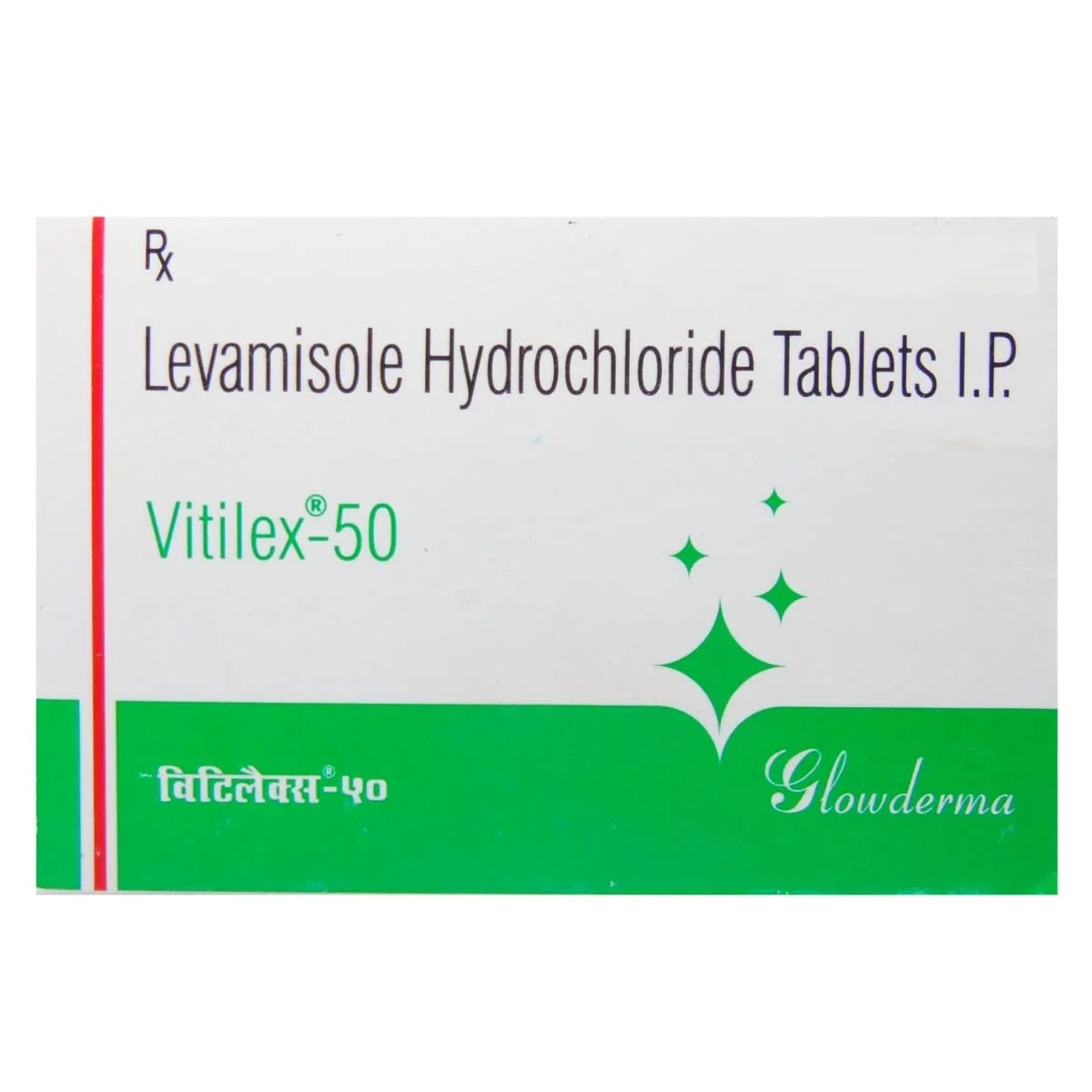
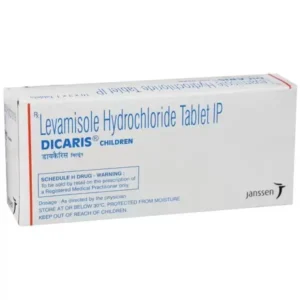
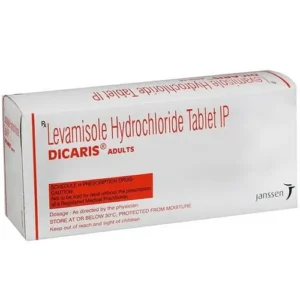
Vitilex 50Mg (Levamisole)
Price range: $17.00 through $60.00
| Active Ingredient: | Levamisole |
|---|---|
| Indication: | Worm infections |
| Manufacturer: | Glowderma Lab Ltd. |
| Packaging: | 4 Tablets in 1 strip |
| Strength: | 50mg |
| Delivery Time: | 12 to 17 days |
Vitilex 50mg (Levamisole): Uses, Dosage, Benefits, Side Effects & Complete Guide
Introduction:-
Intestinal parasitic infections continue to pose a significant public health challenge, particularly in regions with limited access to clean water, adequate sanitation, and proper hygiene infrastructure. Among the many antiparasitic medications developed over the past several decades, Levamisole stands out as a pharmacologically unique and clinically important agent — valued not only for its antiparasitic properties but also for its documented immunomodulatory effects.
Vitilex 50mg (Levamisole) is a prescription-grade oral anthelmintic tablet that has been used in clinical practice to treat susceptible intestinal worm infections — most notably roundworm (Ascaris lumbricoides) infestations. Its targeted mechanism of action, combined with a relatively well-established safety profile when used under appropriate medical supervision, makes it a meaningful option in antiparasitic therapy.
This comprehensive guide is designed to give patients, caregivers, and healthcare-curious readers a clear, accurate, and thorough understanding of Vitilex 50mg (Levamisole) — covering everything from its composition and mechanism of action to dosage guidelines, side effects, precautions, drug interactions, and answers to the most commonly asked questions.
What is Vitilex 50mg (Levamisole)?
Vitilex 50mg is an oral antiparasitic tablet containing Levamisole hydrochloride as its active pharmaceutical ingredient. Levamisole is the levorotatory (L-) isomer of tetramisole, a compound originally developed in the 1960s. It belongs to the imidazothiazole class of anthelmintic drugs and has a long history of use in both human and veterinary medicine.
What makes Levamisole particularly interesting from a pharmacological perspective is its dual activity — it functions both as an anthelmintic (anti-worm agent) and as an immunomodulator (a substance that modifies immune system activity). This dual profile has historically led to its use in a variety of clinical contexts beyond simple deworming.
In the context of Vitilex 50mg, the primary therapeutic application is the treatment of intestinal roundworm infections (Ascaris lumbricoides) — one of the most widespread soil-transmitted helminth infections globally.
Vitilex 50mg is available as an oral film-coated tablet, and Levamisole is also available in some regions as an oral liquid or as alternative salt formulations. The 50mg strength is among the standard dosing units used in pediatric and adult regimens.
Vitilex 50mg Composition:-
| Property | Details |
|---|---|
| Active Ingredient | Levamisole Hydrochloride |
| Equivalent Base | Levamisole 50mg (as hydrochloride salt) |
| Drug Class | Anthelmintic / Imidazothiazole derivative; Immunomodulator |
| Dosage Form | Film-coated oral tablet |
| Therapeutic Category | Antiparasitic / Anthelmintic |
| Route of Administration | Oral |
| Typical Pack Size | 1–6 tablets per pack (varies by region/manufacturer) |
| Prescription Status | Prescription-only medicine (POM) in most countries |
Note: Manufacturer identity may vary across different countries where Vitilex is marketed. Always consult the product insert specific to your region for complete compositional details, including excipients and inactive ingredients.
How does Vitilex 50mg work?
The pharmacology of Levamisole is distinctive and separates it from other commonly used anthelmintic agents such as the benzimidazoles (albendazole, mebendazole) and Pyrantel.
Mechanism of Action
Levamisole acts as a nicotinic acetylcholine receptor agonist in the nervous system of susceptible nematode (roundworm) parasites. In simpler terms, it mimics the action of the neurotransmitter acetylcholine by binding to specific receptors in the worm’s neuromuscular system.
This binding causes a state of sustained spastic paralysis — the worm’s muscles lock into a rigid, contracted state. Unlike some other anthelmintics that cause flaccid (limp) paralysis, the spastic paralysis induced by Levamisole is irreversible under therapeutic conditions, making it highly effective.
It is important to note that Levamisole’s nicotinic receptor binding is selective for nematode receptor subtypes that differ meaningfully from the human nicotinic acetylcholine receptor — which is why, at therapeutic doses, the drug paralyzes worms without similarly affecting the patient’s neuromuscular system.
Effect on Parasitic Worms
Once the spastic paralysis takes effect:
- The worm loses its ability to maintain its position in the intestine
- Normal intestinal peristalsis carries the paralyzed, living worm toward the colon
- The worm is then expelled through normal bowel movements
- Expulsion typically occurs within hours to a day or two following treatment
- Patients may notice intact or partial worms in their stool — this is expected and confirms treatment is working
Immunomodulatory Activity
Beyond its antiparasitic action, Levamisole has well-documented immunostimulatory properties. It can enhance the function of:
- T-lymphocytes (restoring depressed T-cell function)
- Macrophages (improving phagocytic activity)
- Neutrophil chemotaxis
This immunomodulatory profile has historically led to Levamisole’s investigation and use (often off-label) in conditions involving immune dysregulation, including as an adjunct in certain oncological settings. However, these uses are outside the scope of Vitilex 50mg’s primary antiparasitic indication and should only be pursued under specialist medical supervision.
Elimination from the Body
- Levamisole is rapidly absorbed from the gastrointestinal tract following oral administration
- Peak plasma concentration is reached within approximately 1.5–2 hours
- It undergoes significant hepatic (liver) metabolism
- The plasma half-life is approximately 3–4 hours for the parent compound
- Metabolites are primarily excreted via the kidneys (urine), with smaller amounts in feces
- Complete elimination generally occurs within 24–48 hours after a single therapeutic dose
Vitilex 50mg Uses:-
Treatment of Roundworm Infections
The primary and most well-established use of Vitilex 50mg is the treatment of ascariasis, an intestinal infection caused by Ascaris lumbricoides, the largest intestinal nematode affecting humans. Ascariasis is estimated by the WHO to affect over 800 million people globally, with the highest burden in sub-Saharan Africa, South and Southeast Asia, and parts of Latin America.
Symptoms of roundworm infection can range from mild or absent (in light infections) to:
- Abdominal pain and bloating
- Nausea and intermittent vomiting
- Visible worms in stool or occasionally vomited
- Nutritional deficiencies and impaired growth in children
- Intestinal obstruction (in severe, heavy worm burdens)
- Respiratory symptoms during larval migration phase (Löffler’s syndrome)
A single weight-based oral dose of Levamisole achieves high cure rates in straightforward ascariasis, making it a practical treatment option, particularly in resource-limited settings.
Deworming Therapy
Vitilex 50mg has been used in community and school-based deworming programs in certain regions, particularly where Ascaris infections are endemic. As part of structured parasitic disease control initiatives, single-dose anthelmintic treatment is administered periodically to at-risk populations — especially children — to reduce worm burdens and improve nutritional and educational outcomes.
Doctor-Prescribed Uses
Beyond its primary anthelmintic indication, physicians may prescribe Levamisole for:
- Hookworm infections (Ancylostoma duodenale, Necator americanus) — though efficacy is less consistent than against Ascaris, and other agents may be preferred
- Necatoriasis and ancylostomiasis — under specialist guidance
- Mixed nematode infections — when Ascaris is a confirmed component of a mixed infestation
Other Clinical Applications
Historically and in some current clinical contexts, Levamisole has been investigated or used (under specialist supervision, often off-label) for:
- Adjunctive therapy in colorectal cancer — historically combined with 5-fluorouracil (5-FU); largely replaced by other agents in modern oncology protocols
- Nephrotic syndrome in children — as an immunomodulatory agent to reduce relapse rates (used in some pediatric nephrology centers)
- Autoimmune conditions — due to its immune-modifying properties
- ⚠️ These non-anthelmintic uses are strictly specialist-supervised indications and are not within the scope of routine deworming with Vitilex 50mg.
Explore More Anti-Worm Guides:- Anti-Worm: Complete Guide to Deworming Treatments.
Vitilex 50mg Dosage Guide:-
⚠️ Important: Dosage should always be determined by a qualified healthcare professional. The following information is provided for general educational reference only and must not be used as a substitute for individualized medical advice.
Standard Adult Dosage
| Condition | Dose | Frequency | Duration |
|---|---|---|---|
| Ascariasis (Ascaris lumbricoides) | 150 mg (as a single dose) OR 2.5 mg/kg body weight | Single dose | 1 day |
| Hookworm infections | 150 mg single dose (some guidelines suggest repeat) | Single dose; may repeat after 7 days | 1–2 doses |
| Mixed nematode infections | As directed by the physician (weight-based) | Per physician guidance | Per physician guidance |
💡 Note: Standard adult dosing typically uses three 50mg tablets (150mg total) as a single administration. Always follow your doctor’s specific prescription.
Pediatric Dosage
Levamisole dosing in children is strictly weight-based:
| Child’s Weight | Approximate Levamisole Dose |
|---|---|
| 10–14 kg | 50 mg (1 tablet) |
| 15–24 kg | 75–100 mg (1.5–2 tablets) |
| 25–34 kg | 100–125 mg (2–2.5 tablets) |
| 35–50 kg | 125–150 mg (2.5–3 tablets) |
| Above 50 kg | 150 mg (adult dose — 3 tablets) |
⚠️ Pediatric dosing must be calculated and confirmed by a qualified pediatrician. Splitting or crushing tablets should only be done as directed by a healthcare professional.
Missed Dose Instructions
- Single-dose regimen: If you forget to take your prescribed dose, take it as soon as possible on the same day. If the day has passed, contact your doctor for guidance — do not simply double the next day’s dose.
- Multi-dose or repeated course: Take the missed dose as soon as you remember and continue the remaining doses at the scheduled intervals.
- Never take a double dose to compensate for a missed one.
- If you are uncertain about what to do, call your prescribing doctor or pharmacist for specific advice.
Overdose Information
While Levamisole has a reasonably wide therapeutic window at standard antiparasitic doses, overdose can cause more serious effects than other anthelmintics due to its systemic absorption. Potential overdose symptoms include:
- Severe nausea, vomiting, and abdominal pain
- Intense dizziness or confusion
- Tremors or involuntary movements
- Low white blood cell count (agranulocytosis) — a serious concern with Levamisole at higher/repeated doses
- Seizures (in extreme cases)
If an overdose is suspected, seek immediate emergency medical attention. Do not attempt to induce vomiting unless specifically directed by a medical professional or poison control center.
How to Take Vitilex 50mg?
Following the correct administration procedure helps ensure maximum effectiveness and minimizes the risk of side effects:
- Take with or without food — Vitilex 50mg can be taken either on an empty stomach or with a light meal. Some patients find that taking it with a small amount of food reduces the likelihood of nausea.
- Swallow tablets whole — Unless specifically advised otherwise by your doctor, swallow the tablet(s) whole with a full glass of water. Do not crush or chew unless you have been told it is safe to do so.
- Single-dose convenience — For standard roundworm treatment, the entire prescribed dose (typically all three 50mg tablets = 150mg) is taken at one time, usually in the evening or at bedtime.
- No laxative required — Levamisole does not require a pre- or post-dose laxative or dietary restriction. Worms are expelled naturally through bowel movements.
- Maintain hygiene post-treatment — After taking Vitilex 50mg, practice thorough handwashing before meals and after using the toilet. Wash clothing and bedding promptly if treating pinworms simultaneously.
- Follow-up testing — Your doctor may request a follow-up stool examination 2–4 weeks after treatment to confirm successful parasite eradication.
- Complete the prescribed course — Even if symptoms improve quickly, complete the full treatment as prescribed. Premature discontinuation may leave the infection incompletely treated.
- Avoid alcohol — Although there is no absolute contraindication, alcohol should be avoided during treatment as it may exacerbate dizziness and gastrointestinal side effects.
Vitilex 50mg Side Effects:-
Vitilex 50mg is generally tolerated well at the single antiparasitic doses used for roundworm treatment. Side effects, when they occur, are typically mild and transient.
Side Effects Overview Table
| Side Effect | Type | Estimated Frequency | Recommended Action |
|---|---|---|---|
| Nausea | Common | Common (1–10%) | Take with a light snack; usually self-resolving |
| Abdominal discomfort/cramping | Common | Common (1–10%) | Rest, warm compress, contact a doctor if severe |
| Vomiting | Common | Common (1–10%) | Stay hydrated; inform the doctor if persistent |
| Diarrhea | Common | Uncommon (<5%) | Maintain fluid intake; usually self-limiting |
| Headache | Common | Common (1–10%) | Rest; OTC analgesic if needed; inform doctor if severe |
| Dizziness / Lightheadedness | Common | Uncommon (<5%) | Avoid driving; sit or lie down safely |
| Fatigue / Malaise | Common | Uncommon (<5%) | Rest; typically resolves within hours |
| Loss of appetite | Common | Uncommon (<5%) | Usually transient; ensure adequate nutrition |
| Skin rash / Urticaria | Potentially serious | Rare (<1%) | Stop medication; seek medical review promptly |
| Agranulocytosis (low white blood cells) | Serious | Rare — more associated with prolonged/repeated dosing | Seek immediate medical attention if fever, sore throat, or mouth ulcers develop |
| Severe allergic reaction / Anaphylaxis | Serious | Very rare (<0.1%) | Call emergency services immediately |
| Liver enzyme elevation | Serious | Rare (<1%) | Inform the doctor; liver function monitoring if indicated |
| Neurological effects (tremors, confusion) | Serious | Very rare | Seek immediate medical attention |
⚠️ Special Alert — Agranulocytosis: One of the most clinically significant risks associated with Levamisole — particularly with prolonged, repeated, or high-dose use — is agranulocytosis (a dangerous drop in white blood cells). While this is far less common with single-dose antiparasitic use, it is important to report any unexplained fever, mouth ulcers, persistent sore throat, or unusual infections to your doctor promptly. This risk is why Levamisole requires medical supervision and should not be self-prescribed for repeated use.
Precautions and Warnings:-
Before taking Vitilex 50mg (Levamisole), a thorough medical consultation is essential. Discuss the following with your doctor:
Pregnancy
Levamisole should be used during pregnancy only when clearly necessary and when the potential benefits outweigh the risks. There is insufficient robust clinical data to establish the safety of Levamisole in all stages of pregnancy. Most guidelines recommend avoiding use during the first trimester and using it in later trimesters only under direct physician supervision. Always consult your obstetrician before taking any antiparasitic medication during pregnancy.
Breastfeeding
Levamisole and its metabolites may pass into breast milk. The extent of infant exposure and its clinical significance is not fully established. As a precautionary measure, breastfeeding mothers should discuss the timing of the dose with their doctor — a brief interruption of breastfeeding for 24–48 hours after the dose, with expressed milk discarded, may be recommended as a precaution.
Liver Disease
Since Levamisole undergoes significant hepatic metabolism, patients with impaired liver function may experience reduced drug clearance, leading to higher plasma levels and a potential increase in adverse effects. Dose adjustment or an alternative anthelmintic may be necessary — this must be evaluated by a physician.
Kidney Disease
The metabolites of Levamisole are primarily renally excreted. In patients with significant renal impairment, metabolite accumulation is possible. Inform your doctor of any kidney condition, as monitoring or dose modification may be warranted.
Blood Disorders
Patients with a pre-existing history of blood disorders — particularly those involving white blood cell deficiencies (leukopenia, neutropenia) — require extra caution. Levamisole’s potential to cause agranulocytosis means that any pre-existing hematological vulnerability significantly increases risk. A baseline blood count may be recommended before treatment in high-risk patients.
Drug Allergies
Do not take Vitilex 50mg if you are allergic to Levamisole hydrochloride or any of the tablet excipients. Review the product leaflet for the full list of inactive ingredients to identify any known allergens.
Drug Interactions:-
Levamisole has a broader potential for drug interactions compared to some other anthelmintics, largely due to its systemic absorption and immunomodulatory properties.
| Interacting Drug / Substance | Type of Interaction | Clinical Significance | Recommendation |
|---|---|---|---|
| Warfarin / Anticoagulants | Levamisole may potentiate anticoagulant effects, increasing bleeding risk | High | Inform doctor; INR/PT monitoring essential; dose adjustment may be needed |
| Phenytoin (anticonvulsant) | Levamisole may increase phenytoin plasma levels, raising toxicity risk | Moderate–High | Monitor phenytoin levels; dose adjustment may be required |
| Alcohol | May potentiate CNS depressant effects; increased dizziness and nausea | Moderate | Avoid alcohol during and shortly after treatment |
| Fluorouracil (5-FU) | Historical combination in oncology significantly increases the risk of serious toxicity (agranulocytosis) when combined | High | This combination should only be used under strict oncologist supervision |
| Immunosuppressant drugs (e.g., cyclosporine, methotrexate) | Potential antagonistic or unpredictable immune interaction | Moderate | Inform prescribing physician; specialist assessment required |
| Other anthelmintics (e.g., pyrantel) | Theoretical additive neuromuscular effects; limited clinical data | Low–Moderate | Avoid combination unless specifically prescribed |
| Clozapine | Both drugs are independently associated with agranulocytosis; the combined risk may be significantly elevated | High | Avoid concurrent use without specialist hematological monitoring |
| OTC NSAIDs / Analgesics | Generally low interaction risk at antiparasitic doses; inform pharmacist | Low | Disclose all OTC medications to your pharmacist |
Always provide your prescribing doctor and pharmacist with a complete, up-to-date list of all medications, supplements, and herbal products you are taking.
Who Should Avoid Vitilex 50mg?
Vitilex 50mg is contraindicated or requires extreme caution in the following patients:
- Known hypersensitivity or allergy to Levamisole or any component of the formulation
- Children under 2 years of age — safety and dosing not well-established; use only under strict specialist supervision
- Patients with pre-existing agranulocytosis, neutropenia, or significant leukopenia — Levamisole can further suppress white blood cell counts
- Patients with severe hepatic failure — impaired metabolism leads to drug accumulation and increased toxicity risk
- Patients concurrently taking Warfarin or other oral anticoagulants — unless under careful medical monitoring with dose adjustment
- Patients concurrently taking Clozapine or other agents independently associated with agranulocytosis — combined risk is unacceptably high without specialist oversight
- Pregnant women in the first trimester — insufficient safety data; benefit-risk assessment required for later trimesters
- Patients with a history of serious adverse reactions to Levamisole or imidazothiazole-class drugs
Storage Instructions:-
Proper storage of Vitilex 50mg ensures the medication maintains its potency and safety throughout its shelf life:
- 🌡️ Temperature: Store at room temperature between 15°C and 25°C (59°F–77°F) — avoid exposure to extreme heat
- 💧 Moisture: Keep in a dry environment — do not store in bathrooms, near sinks, or in humid areas; moisture can compromise tablet integrity
- ☀️ Light: Protect from direct sunlight and UV exposure — store in the original blister pack or amber bottle within a closed cupboard
- 🧒 Child safety: Keep strictly out of the reach and sight of children — store in a locked cabinet to prevent accidental ingestion
- 📅 Expiry date: Always check and strictly observe the expiry date on the packaging; never use expired medication
- 🗑️ Disposal: Return unused or expired Vitilex 50mg to a licensed pharmacy for safe disposal — do not flush or discard in household waste
Vitilex 50mg vs Other Deworming Medicines:-
Understanding how Levamisole compares to other widely used anthelmintic agents helps inform appropriate prescribing and patient understanding.
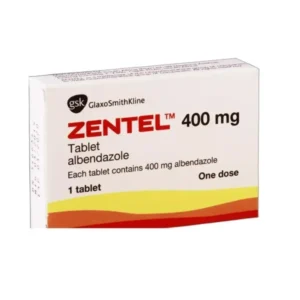
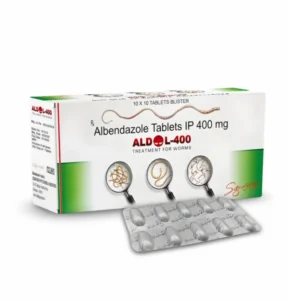
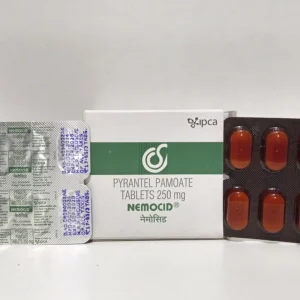
| Feature | Vitilex 50mg (Levamisole) | Albendazole | Mebendazole | Pyrantel (Nemocid) |
|---|---|---|---|---|
| Drug Class | Imidazothiazole | Benzimidazole | Benzimidazole | Tetrahydropyrimidine |
| Primary Mechanism | Nicotinic receptor agonist → Spastic paralysis | Microtubule inhibition → glucose uptake disruption | Microtubule inhibition | Nicotinic receptor agonist → Spastic paralysis |
| Roundworms (Ascaris) | ✅ Highly effective | ✅ Highly effective | ✅ Highly effective | ✅ Highly effective |
| Hookworms | ⚠️ Moderate efficacy | ✅ Highly effective | ✅ Effective | ✅ Effective |
| Pinworms | ⚠️ Limited / not first-line | ✅ Effective | ✅ Effective | ✅ First-line |
| Whipworms | ❌ Not effective | ✅ Effective | ✅ Effective | ❌ Not effective |
| Tapeworms | ❌ Not effective | ✅ Some species | ❌ Limited | ❌ Not effective |
| Immunomodulatory activity | ✅ Yes (significant) | ❌ No | ❌ No | ❌ No |
| Systemic absorption | Significant | Moderate | Minimal | Minimal |
| Agranulocytosis risk | ⚠️ Yes (monitor) | ❌ Not a concern | ❌ Not a concern | ❌ Not a concern |
| Typical dose duration | Single dose (deworming) | Single dose or 3 days | 1–3 days | Single dose |
| Suitable for children | ≥ 2 years (weight-based) | ≥ 1 year | ≥ 2 years | ≥ 2 years |
| Drug interaction profile | More complex | Moderate | Low | Low |
| WHO Essential Medicine | ✅ Yes (veterinary/human) | ✅ Yes | ✅ Yes | ✅ Yes |
| Prescription Status | Prescription-only (most countries) | Rx (most countries) | Rx / OTC (varies) | Rx / OTC (varies) |
Frequently Asked Questions (FAQs)?
1. What is Vitilex 50mg used for?
Vitilex 50mg (Levamisole) is primarily used to treat intestinal roundworm infections caused by Ascaris lumbricoides — one of the most common parasitic infections worldwide. Under physician guidance, it may also be used for certain hookworm infections and as part of community deworming programs. Additionally, Levamisole has clinical applications as an immunomodulatory agent in specialized medical contexts, though these require strict specialist supervision and are separate from its antiparasitic use.
2. How does Levamisole work against worms?
Levamisole works by acting as a nicotinic acetylcholine receptor agonist in the neuromuscular system of susceptible nematode parasites. It binds to specific receptor subtypes found in worms, causing irreversible spastic paralysis — the worm’s muscles contract rigidly and cannot relax. The paralyzed worm can no longer grip the intestinal wall and is naturally swept out of the body through normal bowel movements. This mechanism is distinct from benzimidazole agents (albendazole, mebendazole) which work by disrupting the worm’s energy metabolism.
3. Can Vitilex 50mg treat roundworm infections effectively?
Yes — treating Ascaris lumbricoides (roundworm) is the primary indication for Vitilex 50mg. Clinical evidence supports high cure rates for ascariasis with a single weight-based dose of Levamisole. Patients often notice worms being expelled in their stool within 24–48 hours of treatment. A follow-up stool examination 2–4 weeks after treatment is typically recommended to confirm successful clearance.
4. Is Levamisole safe for children?
Levamisole can be used in children aged 2 years and older using appropriate weight-based dosing, and it has been used in pediatric populations in various countries. However, compared to agents like Pyrantel or Albendazole — which have a more straightforward safety profile — Levamisole carries a slightly more complex risk profile (including the rare but serious agranulocytosis risk). It should always be prescribed and dosed by a qualified pediatrician, and parents should be aware of warning signs such as unexplained fever or mouth ulcers following treatment.
5. What are the most common side effects of Vitilex 50mg?
The most frequently reported side effects include nausea, abdominal discomfort, vomiting, headache, and mild dizziness. These are generally mild and resolve on their own within a few hours. More serious — though rare — side effects include skin rash, elevated liver enzymes, and agranulocytosis (a significant drop in white blood cells). If you develop unexplained fever, persistent sore throat, mouth ulcers, or signs of an allergic reaction after taking Vitilex 50mg, seek medical attention promptly.
6. Can I take Vitilex 50mg with food?
Yes — Vitilex 50mg can be taken with or without food. Food is not required for therapeutic efficacy, as the drug is absorbed systemically regardless. However, if you are prone to nausea with oral medications, taking the tablet with a light, non-fatty meal may help reduce gastrointestinal discomfort. Avoid alcohol around the time of dosing, as it can worsen dizziness and nausea.
7. Do I need a prescription for Levamisole (Vitilex 50mg)?
Yes — in most countries, Levamisole is a prescription-only medication (POM). This is an important distinction from some other dewormers that may be available over the counter. The prescription requirement reflects Levamisole’s more complex pharmacological profile, including its systemic absorption, potential for significant drug interactions, and the rare but serious risk of agranulocytosis with repeated use. Self-medicating with Levamisole is strongly discouraged. Always seek a proper diagnosis and prescription from a licensed healthcare provider.
8. Can pregnant women take Vitilex 50mg?
Vitilex 50mg (Levamisole) is generally not recommended during pregnancy, particularly in the first trimester, due to limited clinical safety data. In the second and third trimesters, a prescribing physician may consider its use if the benefits of treating a significant worm infestation clearly outweigh the potential risks — for example, in cases where heavy worm burden is compromising maternal nutrition. Any decision regarding Levamisole use during pregnancy must involve a qualified obstetrician or specialist who can make an individualized risk-benefit assessment.
Medical Disclaimer:-
This article is for informational and educational purposes only. It does not constitute medical advice, diagnosis, or treatment. Always consult a qualified healthcare professional before starting, changing, or stopping any medication.
Additional information
| mg | 150mg, 50mg |
|---|---|
| unit | 20 Tablets, 40 Tablets, 60 Tablets |
Reviews
There are no reviews yet.